
The Sindh Bar Council (SBC) has proposed the establishment of a dedicated Police Desk at its office in the Sindh High Court building, Karachi, aimed at providing a streamlined and institutional mechanism for addressing complaints of lawyers. The initiative is intended to reduce the need for members of the legal fraternity to directly approach police stations and to ensure a more organized system of coordination with law enforcement authorities.
The primary purpose of this initiative is to create a centralized complaint-handling facility exclusively for lawyers, enabling them to have their grievances addressed efficiently. It seeks to improve access to justice for advocates, ensure timely police response, and strengthen coordination between the bar and police departments. By institutionalizing this mechanism, the SBC aims to enhance both convenience and professional support for lawyers across Sindh.
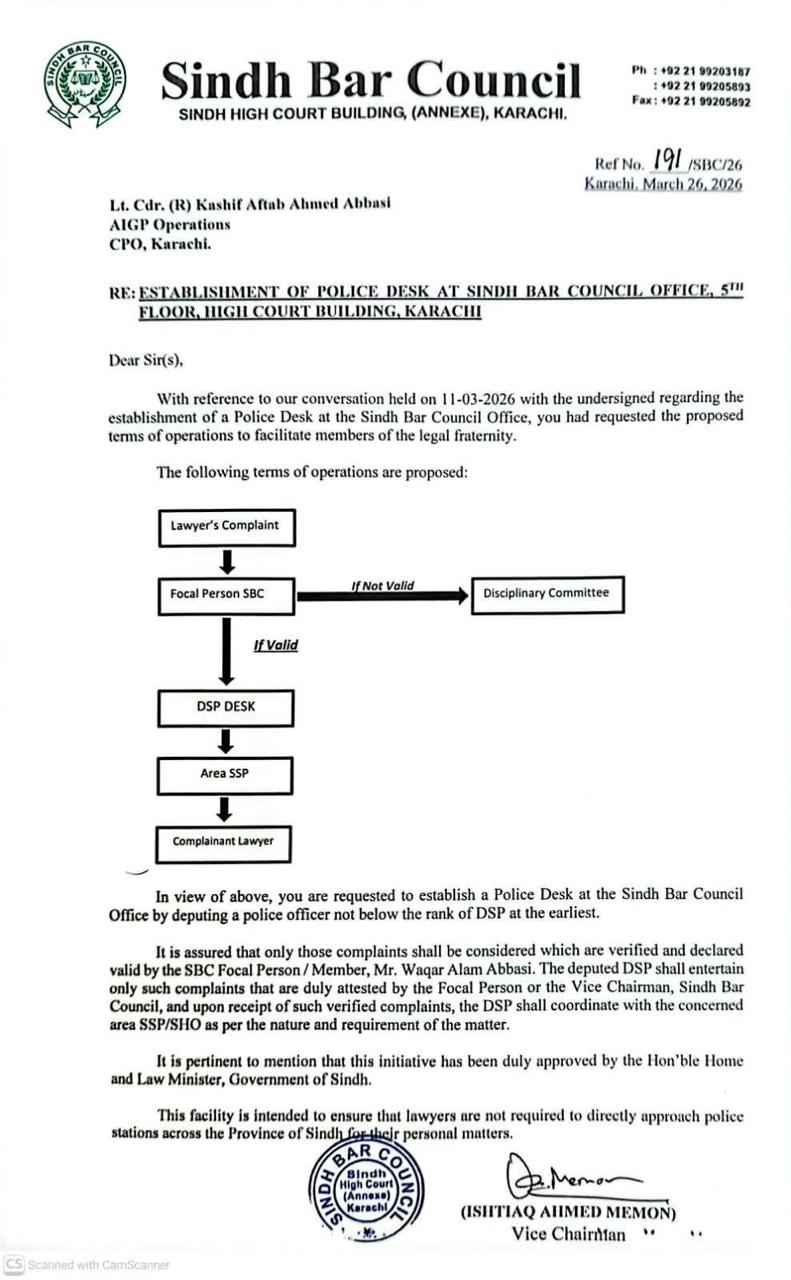
According to the proposed framework, the facility will only entertain complaints filed by lawyers, but such complaints may be against any individual, official, or entity, depending on the nature of the matter. This makes it clear that the desk is not limited to complaints against lawyers; rather, it is a facilitation platform for lawyers as complainants. However, complaints that are found invalid or inappropriate may be referred to the SBC’s Disciplinary Committee, particularly in cases involving professional conduct.
The initiative was developed following discussions between SBC officials and police authorities earlier in March 2026. The proposed terms of operation were designed to ensure proper scrutiny, coordination, and efficiency in complaint handling. The move has also received approval from the Sindh Home and Law Ministry, indicating official backing at the provincial level.
Process Flow
* A lawyer submits a complaint
* The complaint is reviewed by the SBC focal person
* If not valid → referred to the Disciplinary Committee
* If valid → forwarded to the Police Desk
* Complaint handled by DSP-level officer
* DSP coordinates with relevant Area SSP/SHO
* Matter pursued on behalf of the complainant lawyer
A police officer of the rank of DSP will be deputed at the desk, who will act as the central authority for handling verified complaints. The officer will only entertain cases that have been vetted and approved by the SBC focal person or authorized member, ensuring that frivolous or unverified complaints are filtered out at the initial stage. Upon receiving a verified complaint, the DSP will coordinate directly with the concerned area SSP or SHO, depending on the nature and jurisdiction of the case, thereby ensuring prompt and effective action.
The expected impact of this initiative is significant, as it will likely lead to quicker resolution of complaints, reduce the burden on police stations, and improve overall trust between the legal community and law enforcement agencies. By introducing a structured and transparent system, the Police Desk is poised to serve as a vital bridge between lawyers and the police, promoting efficiency, accountability, and better service delivery within the justice system.
