Find Court Jurisdiction
Judicial Magistrate Syed Akhter Shah Receives Best Performance Award
Judicial Magistrate Syed Akhter Shah has received the Best Performance Award from Chief Justice of Pakistan Justice Yahya Afridi, in recognition of his notable judicial
Balochistan High Court Confirms Services of Three Additional District & Sessions Judges
Quetta – The High Court of Balochistan has officially confirmed the services of three Additional District and Sessions Judges (BPS-20) with effect from August 30, 2025, the date of their initial promotion. The confirmation, issued under the Balochistan Judicial Officers Service Rules 2021, was approved by the Hon’ble Chief Justice and formalized through a notification dated September 5, 2026. The confirmed officers are Mr. Allah Muhammad, Mr. Aziz Ahmed, and
Lahore High Court Bar Association Vows to Defend Blasphemy Laws, Rejects Any Amendment
Lahore – August 28, 2026: The Lahore High Court Bar Association (LHCBA) has issued a strong condemnation against recent remarks made on August 22, 2026, in Lahore and Islamabad, which it says challenge the sanctity of Pakistan’s blasphemy laws. In an official statement, the bar association denounced any attempt to question or undermine the legal provisions, including Sections 295-A to 295-C, 298-A to 298-C of the Pakistan Penal Code, as well as the Qadiani Ordinance and the Law of Respect of Sahaba and Ahle Bait. It has demanded that federal and provincial authorities review all related content strictly in accordance with the law and take indiscriminate legal action against those responsible. Clear Stance Against Dilution of Laws: The LHCBA firmly
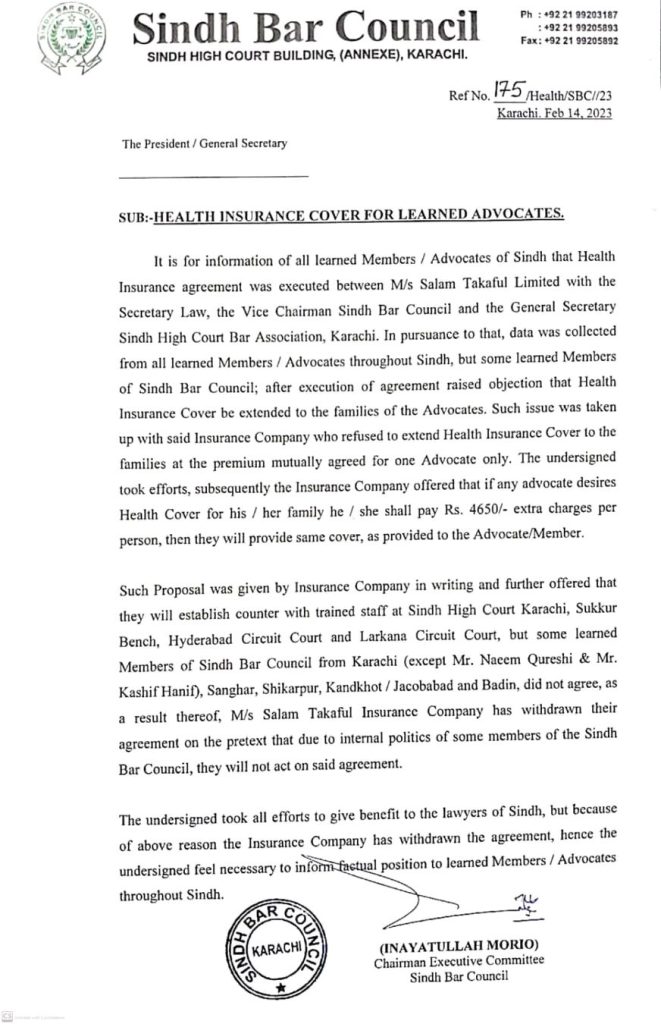
Sindh Bar Council Announces Province-Wide Court Strike Over Priya Kumari, Missing Children Cases
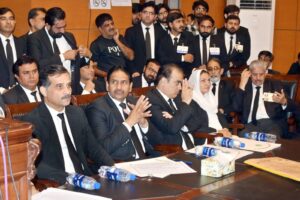
The Sindh Bar Council (SBC) has announced a province-wide strike of court proceedings on Friday (July 24) to protest the continued disappearance of Priya Kumari and several other missing children in Sindh, while also condemning the reported police action against

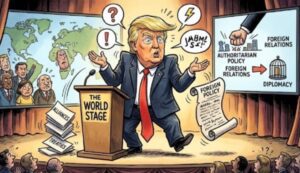
The changing landscape of US foreign policy amid contemporary global conflicts.
The United States of America has long remained a principal architect of the international order, making its foreign policy a decisive force in shaping global peace, security, and economic stability. However, the international system is increasingly defined by great-power rivalry, regional conflicts, economic competition, and emerging geopolitical challenges. From the war in Ukraine and instability in the Middle East to growing tensions in the Indo-Pacific, the global order is becoming more complex and fragmented. Despite these challenges, U.S. foreign policy has evolved significantly. This blog examines the transformation of U.S. foreign policy from its post-9/11 focus on counterterrorism toward strategic competition with major powers, while simultaneously addressing multiple global crises. The world order is currently undergoing a major transformation driven by great-power rivalry, regional conflicts, economic competition, and technological change. Under Donald Trump’s administration, U.S. foreign policy has increasingly emphasized an “America First” approach, with greater attention to protectionism, reindustrialization, supply-chain restructuring, and strategic competition with China. Washington has also sought to reinforce its influence in the Western Hemisphere while encouraging allies to assume greater responsibility for regional security. This approach allows the United States to concentrate more of its strategic resources on managing China’s growing influence. At the same time, emerging institutions reflect increasing competition over the future rules of global governance. Organizations and initiatives such as BRICS and the New Development Bank have promoted greater financial cooperation among emerging economies and encouraged discussions about reducing dependence on the U.S. dollar through increased use of local currencies. Consequently, China has become a central priority of U.S. foreign policy, replacing much of the post-9/11 emphasis on counterterrorism. The United States is also focusing on strengthening domestic governance, economic competitiveness, education, and technological development to maintain its global leadership. Furthermore, Washington has increasingly emphasized diplomacy and negotiations, combining diplomatic engagement with economic and strategic leverage rather than relying primarily on military force or sanctions. The U.S.-China relationship represents one of the most important dimensions of this changing global order. A high-level U.S. presidential visit to China would have major implications for the global economy, technology, international conflicts, oil prices, and financial markets. Such a visit can carry significant diplomatic symbolism, particularly when accompanied by ceremonial honors and carefully planned public events. Yet the relationship remains highly competitive because of the trade war, advanced AI-chip restrictions, tensions over Taiwan, conflicts involving Iran, and the broader economic rivalry between the two countries. Despite these tensions, the United States remains a major global power. However, permanent confrontation is difficult to sustain because American voters are ultimately concerned with how foreign policy affects their lives at home. The relationship between Washington and Beijing therefore represents a form of controlled competition. Both powers seek to protect their national interests while attempting to avoid actions that could cause severe economic or strategic damage to themselves. Technology has also become a major instrument of geopolitical power, particularly through competition over artificial intelligence, semiconductors, telecommunications, and advanced industries. The challenge for both countries is to manage this competition without allowing it to develop into a broader confrontation. When it comes to Russia, the Trump administration has shown a greater willingness to consider normalizing relations compared with the previous approach. Russia has re-emerged as an important center of geopolitical power, while the United States had previously provided strong support to Ukraine. Trump’s approach has emphasized ending or reducing U.S. involvement in the Russia-Ukraine conflict and prioritizing economic stability and domestic interests. His statement that the United States is separated from the conflict by an ocean reflects his broader argument that Washington should avoid becoming permanently involved in distant wars. This approach demonstrates the unpredictable and rapidly changing nature of Trump’s foreign-policy priorities. U.S. policy toward Iran also demonstrates the complexities of American foreign relations. After decades of confrontation, sanctions, and military pressure, Washington has struggled to achieve a stable long-term outcome. Israel remains one of the United States’ strongest allies in the Middle East, and its security concerns have significantly influenced American policy toward Iran. Support for Israel, regional security considerations, domestic political pressures, and lobbying have all contributed to the United States’ approach to the conflict. Recent tensions have highlighted the potential costs of direct confrontation with Iran, including military pressure, disruption of energy supplies, risks surrounding the Strait of Hormuz, rising energy prices, and growing domestic opposition. Any major conflict with Iran could also have wider geopolitical consequences because Iran maintains important relationships with countries such as China and Russia and has strategic ties with North Korea. Therefore, U.S. foreign policy must balance military power with diplomacy, economic interests, domestic priorities, and the broader consequences of escalation. Overall, U.S. foreign policy is moving through a period of significant transformation. The post-9/11 emphasis on counterterrorism is increasingly being replaced by
Article 9A: From Constitutional Promise to the Right to a Clean, Healthy and Sustainable Environment
For decades, Pakistan’s environmental crisis was framed almost entirely as a technical problem — pollution to be measured, forests to be counted, water tables to be monitored. That framing changed

Does Pakistan Need a Separate Constitutional Court?
Does Pakistan Need a Separate Constitutional Court? The proposal to establish a separate Constitutional Court in Pakistan has sparked a vigorous and often contentious debate. Proponents argue that such a

Artificial Intelligence, Copyright Ownership and the Future of Intellectual Property Rights
The Copyright Dilemma in the Age of Artificial Intelligence Artificial Intelligence (AI) is transforming how society creates, consumes, and distributes knowledge. From generating artwork and music to drafting articles, software
British Constitution – Salient Features
Q Describe the salient features of the british constitution? Q What are the salient features of british constitution? Q What is constitution and what are
Getting enrolled as an Advocate
First Intimation
Law- Gat
Second Intimation
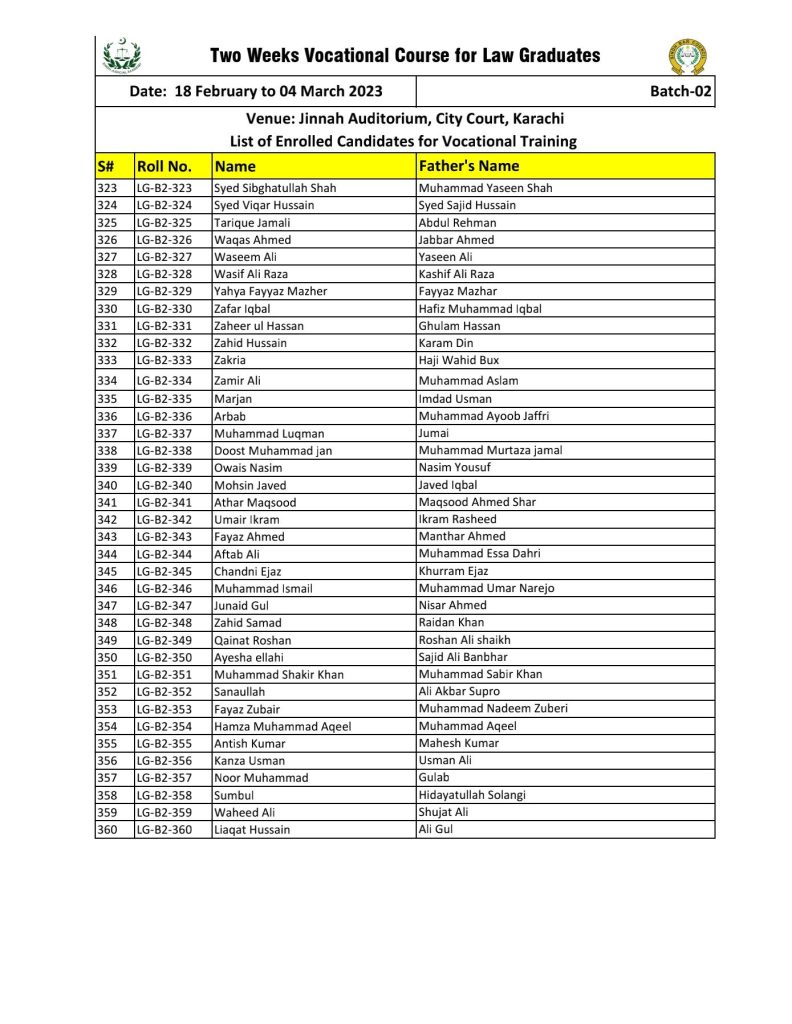
Two Weeks Vocational Training Course
Short Test and Viva -voice Examination
Enrollment
Dive into the legal realm with ‘The Lex’ magazine, your go-to source for insightful articles, case analyses, and expert commentary. Explore diverse legal topics, stay updated on current affairs, and deepen your understanding of the law with our comprehensive content
WE OFFER A BROAD RANGE OF Legal platforms.

US-USSR Cold War: Origins & Impacts
Introduction: The Cold War was a prolonged period of political tension and ideological conflict that dominated the world stage from the end of World War
After peaking in mid-June, the average cost of regular gasoline has followed a global decline in oil prices and is back to where it was in March. The increase is a welcome change for Pakistan, which is struggling with skyrocketing costs and would also damage policymakers containing inflation.
Contact US
HAVE A DEAL? GET IN TOUCH!
Our experienced team will happily consult you on any questions you might have. Feel free to contact us at any time.
+92 306 2808436
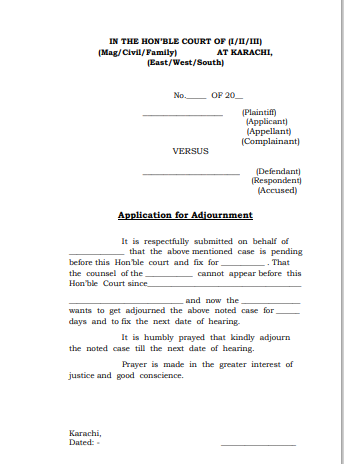
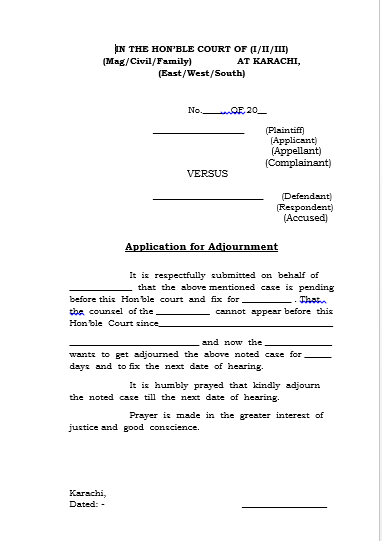
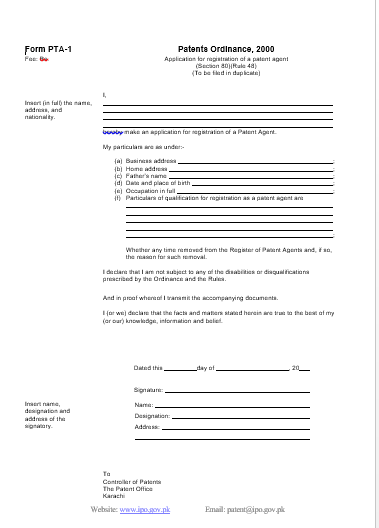
Legal template
Findings
pakistan case laws referenace
Citation Name: ylr-2005-552
Saima Aslam vs Asif Tufail
s. 491---Habeas Corpus pettion-----Recovery of minor--- Petition for custody of minor--S.H.O. who conducted raid, recovered and produced the minor in the court and she was given in the hand of the petitioner Who was mopther of the minor-- was sucking baby and interest and welfare of the minor demanded that custody be given to petitorner mother who had not married as compared to the father of the minor.....
Citation Name: PLD 2008 LAH 527
Umar Farooq VS Khushbakhat Mirza and 2 others
---S. 12-Constitution of Pakistan (1973), Art.199---Constitutional Petition--- Visitation Right---Meeting with Minors--- Aggrangement--- Guardain Judge, powers of--- Scope--- pettioner was, father of two minor children and assailed interim arrangement made by Guardian Judge for his meeting with minors-- plea raised by petitioner was that he used to come from foreign country (dubai)......
Division of Law

Family law
Family law is a branch of law that specialises in problems involving family disputes, including marriage, adoption, divorce, and child custody, among others. In family court hearings or other relevant agreements, family law advocates can represent clients. Some family law specialists even focus on issues unrelated to divorce, such as emancipation, paternity, and adoption. The topic of family touches on so many facets of life. As a result, lawyers in the sector assist clients with a wide range of delicate concerns that many people wouldn't presume fall under the purview of family law. The necessary legislation concerning Family law in Pakistan includes - Guardian and Wards Act 1890 -Muslim Family Law Ordinance 1961 - Dissolution of Marriage Act 1939 -West Pakistan Family Court Act, 1964

Criminal Law
The corpus of law that deals with crimes is known as criminal law. It forbids behaviour that is deemed to pose a threat to, be detrimental to, or otherwise pose a risk to the possessions, health, safety, and moral well-being of others, including oneself. The majority of criminal law is established by statute, meaning that a legislature enacts the laws. Those who breaches these laws are punished and rehabilitated under criminal law. Criminal law is a very broad area of practice that includes all matters in which criminality has a role. Every deed or omission that contravenes an order, draws its authority from the legislative, or from a political or religious authority that has unquestionable control over matters of state is regarded as a crime.

Civil law
Civil law is an international legal system that has its roots in mainland Europe. Roman law serves as the intellectual foundation for the civil law system, and its key concepts have been codified into a referable system, which is the main source of legislation. Civil law, or civilian law, also known as private law, is a legal system that developed and intellectualised within the common law framework. Its key feature is that its core principles are codified into a referable system that serves as the primary source of law. Civil law regulates disputes between private individuals or corporate entities, and it deals with issues like personal injury, contracts, property, inheritance, and family law.
Jobs
Bartics
Supreme Court Bar Association
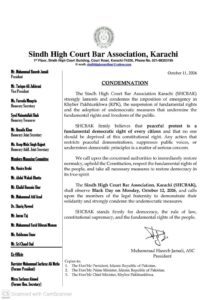
Sindh High Court Bar Association
NOTES FOR ALL SUBJECTS OF LAW💼
School of thought
Q Discuss the contribution of anyone of the following jurists towards the development of Islamic jurisprudence: Imam abu hanifa b. Imam shafi c. Imam malik
Qiyas / Analogy
Q Explain the importance of Qiyas in Islam Q Short note on analogy Q Describe the status of analogy as juristic deduction Qiyas is
Hadd, Qisas and Tazir
Q What is the difference between hadd and qisas and application of tazir in the cases of offeces described in islam. Q Define hadd
Communication and revocation of offer and acceptance
Q answer following Write a detailed note on the communication of offers and acceptances. Can an offer be revoked? If so when? Can an
Sale and agreement to sell and differentiate salient feature
Q define sale and agreement to sell and differentiate salient feature Q what are the essential requisite of sale? under sales of goods act. Essential
Ownership
Q what do you understand by ownership? What are the various kinds of ownership recognised by law. discuss. Q short note on ownership: Q what
find the best lawyer for your case
Specialist in: Civil, Criminal, Banking, Family and FIA Matters
Firm name: Jeelani Law Associate
Specialist in: Criminal, civil, family matters, Environmental laws and high court matters
Firm name: Rizvi law Associate
Specialization in: Civil, Company law, Intellectual Property, Tribunal, etc
Firm name: Tanveer Ahmed and Associate

Advocate Tooba Jameel
Specialization in: Civil, Family and Criminal
Firm name: IQ Legal Associate