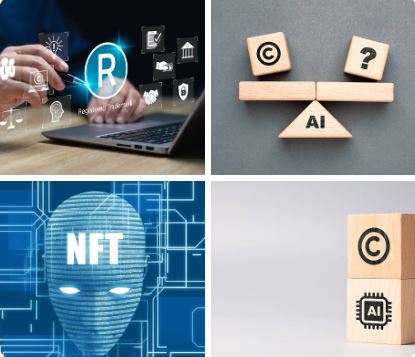
The Copyright Dilemma in the Age of Artificial Intelligence
Artificial Intelligence (AI) is transforming how society creates, consumes, and distributes knowledge. From generating artwork and music to drafting articles, software code, and scientific research, AI systems are increasingly participating in activities once considered uniquely human. While these innovations promise unprecedented productivity and creativity, they also challenge one of the most fundamental principles of intellectual property law: who owns creative works generated by machines? The rapid rise of generative AI has forced lawmakers, courts, creators, and technology companies to confront difficult questions regarding copyright ownership, authorship, and the future of intellectual property rights (IPR). As AI systems become more sophisticated, existing legal frameworks designed for human creators are struggling to keep pace.
Copyright law traditionally protects original works created by human authors. The purpose of copyright is to encourage creativity by granting creators exclusive rights over the use and distribution of their works. Historically, determining ownership has been relatively straightforward because a human author could be identified.
However, generative AI systems such as large language models, image generators, and music-generation platforms complicate this framework. When an AI system independently produces a poem, painting, or piece of software, the question arises: Who is the author?
Possible claimants include:
- The developer who created the AI system.
- The user who provided prompts.
- The owner of the AI platform.
- The AI system itself.
- No one, placing the work in the public domain.
A Landmark Example: Thaler v. Perlmutter
One of the most influential copyright cases involving AI is Thaler v. Perlmutter. In this case, computer scientist Stephen Thaler sought copyright protection for an artwork generated entirely by an AI system called the “Creativity Machine.” He listed the AI as the sole author.
The U.S. Copyright Office rejected the application, and in 2025 the U.S. Court of Appeals affirmed that copyright protection requires human authorship. The court held that works generated solely by AI without meaningful human creative input cannot qualify for copyright protection. This decision reinforced the long-standing principle that copyright law is built around human creativity rather than machine output.
The case has become a defining precedent in discussions about AI-generated content and intellectual property rights worldwide.
AI-Assisted Versus AI-Generated Works
An important distinction is emerging between AI-assisted and AI-generated works. AI-assisted works involve substantial human creativity. For instance:
- A graphic designer uses AI to generate concepts and then extensively edits them.
- A novelist employs AI for brainstorming but writes the final manuscript.
- A musician uses AI-generated melodies as a starting point before composing the final piece.
In such cases, copyright protection may still apply because the final work reflects significant human creative judgment. Conversely, fully autonomous AI-generated works with minimal human involvement face greater obstacles to copyright protection. Recent guidance from the U.S. Copyright Office emphasizes that human authorship remains a prerequisite for copyright registration.
The Training Data Controversy
Beyond ownership of AI outputs lies another major dispute: the use of copyrighted materials to train AI models.
Most generative AI systems learn from enormous datasets that may include books, photographs, news articles, music, and artistic works protected by copyright. Creators argue that their works are being used without permission, compensation, or attribution.
A prominent example is the legal battle between Getty Images and Stability AI. Getty alleged that millions of copyrighted images were used to train Stability AI’s image-generation system without authorization. Although parts of the UK litigation were narrowed for procedural reasons, the broader legal conflict highlights the unresolved question of whether AI training constitutes copyright infringement or fair use.
This issue is central to the future of creative industries because AI developers depend on vast amounts of data, while creators seek protection against uncompensated exploitation of their intellectual property.
Global Regulatory Responses
Governments worldwide are attempting to balance innovation with creator rights. The United States has largely maintained the human-authorship requirement. The Copyright Office has clarified that copyright protection depends on demonstrable human creativity, even when AI tools are involved. The European Union has pursued transparency-oriented regulation through AI governance initiatives. Policymakers have emphasized disclosure requirements regarding training data and copyright compliance. The United Kingdom continues to debate whether text-and-data mining exceptions should allow AI developers broader access to copyrighted content while preserving safeguards for rights holders. Discussions surrounding the Getty-Stability litigation have intensified this debate. China has adopted regulations requiring AI-generated content to meet transparency and accountability standards while supporting technological innovation. These differing approaches suggest that copyright regulation may become increasingly fragmented across jurisdictions.
The Future of Intellectual Property Rights
The future of intellectual property rights will likely depend on how lawmakers resolve three fundamental questions. Should AI Be Recognized as an Author? Current legal systems overwhelmingly reject the idea of machine authorship. Courts continue to treat AI as a tool rather than an independent creator. Yet as AI systems become more autonomous, pressure may grow to reconsider traditional definitions of authorship. Ownership by the user who prompts the AI and AI developer, joint ownership arrangements and no ownership, placing outputs in the public domain carries significant implications for innovation, investment, and creative incentives. Future copyright systems may require licensing frameworks that compensate creators whose works contribute to AI training datasets. Such systems could resemble existing royalty structures in music and publishing industries. The challenge for policymakers is not choosing between AI and creators. Rather, it is designing a legal framework that encourages technological progress while preserving incentives for human creativity. If copyright protection becomes too restrictive, AI innovation could slow dramatically. Conversely, if creators lose control over their works, artistic and cultural production may suffer. A balanced framework must recognize both the economic value of AI development and the rights of individuals whose creativity fuels these systems.
Conclusion
Artificial Intelligence represents one of the most significant challenges intellectual property law has faced since the emergence of the internet. Traditional copyright doctrines built around human authorship are being tested by technologies capable of generating sophisticated creative works at unprecedented scale.
Recent legal developments, including Thaler v. Perlmutter and ongoing disputes involving AI training data, demonstrate that courts and regulators are still defining the boundaries of ownership in the digital age. The future of intellectual property rights will likely depend on developing new legal models that accommodate both human creativity and machine-generated innovation.
As AI becomes increasingly integrated into creative and commercial life, the central question remains unchanged: how can society reward innovation without undermining the very creativity that makes innovation possible? The answer to that question will shape the future of copyright law for decades to come.
Reference:
- Thaler v. Perlmutter (D.C. Circuit, 2025) affirming the human-authorship requirement for copyright eligibility.
- Getty Images v. Stability AI litigation concerning AI training data and copyright infringement claims.
- Recent scholarly research on AI-generated works and copyright ownership.
