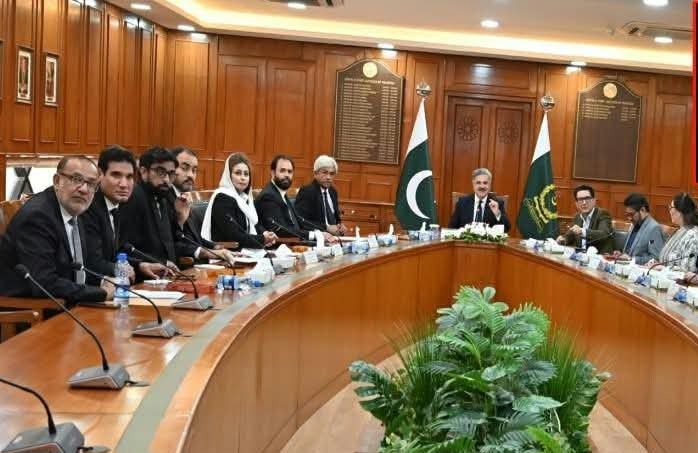
The Chief Justice of Pakistan, serving as Chairman of the Law and Justice Commission, convened a high-level meeting at the Supreme Court to assess preparations for establishing Women Facilitation Centres across the country. The first stage of the initiative will see four such centres — one in each province — offering women involved with the justice system specialised assistance and direction in surroundings that are secure, easily reachable and respectful.
Attendees included the Supreme Court Registrar, Commission Secretary Capt. (Retd) Mushtaq Ahmad, Balochistan High Court Registrar Mr. Nasir Khan, former IAP Islamabad-Rawalpindi Chapter Chairperson Architect Raweeda Himayat, IAP committee members, and NESPAK officials Mr. Faisal Majeed and Mr. Waqar Sheikh. The Commission’s Resident Additional Secretaries for Punjab, Sindh, Khyber Pakhtunkhwa and Balochistan joined via Zoom alongside architects Raza Zahid, Ayesha Yousuf and Hanif Daud, whose entries earned the top three places in the All-Pakistan design competition for the centres.
The Chief Justice noted that 2025–26 judicial facilitation efforts had centred on four areas — reliable power for courts and bar associations, e-libraries with internet access, safe drinking water and facilities tailored for women — all now delivered nationwide, including Islamabad. He set the creation of Women Facilitation Centres in all four provinces and the capital as the priority for 2026–27, describing them as one-window hubs where women can obtain information, guidance and help without visiting multiple offices. Planned features include reception and guidance counters, waiting lounges, clean washrooms, private consultation rooms, legal aid, mediation and ADR spaces, psychosocial support and referral services, plus accessible entrances, ramps, clear signage and child-friendly visitation areas.
