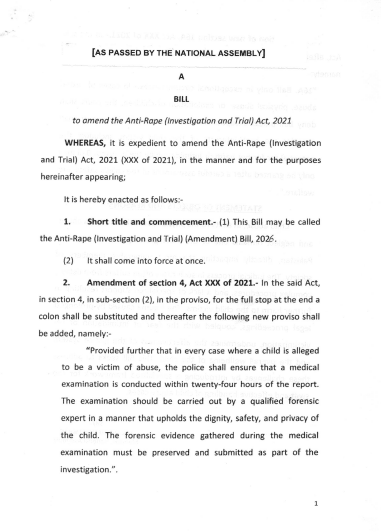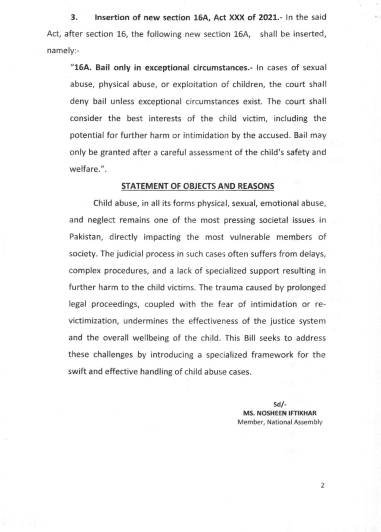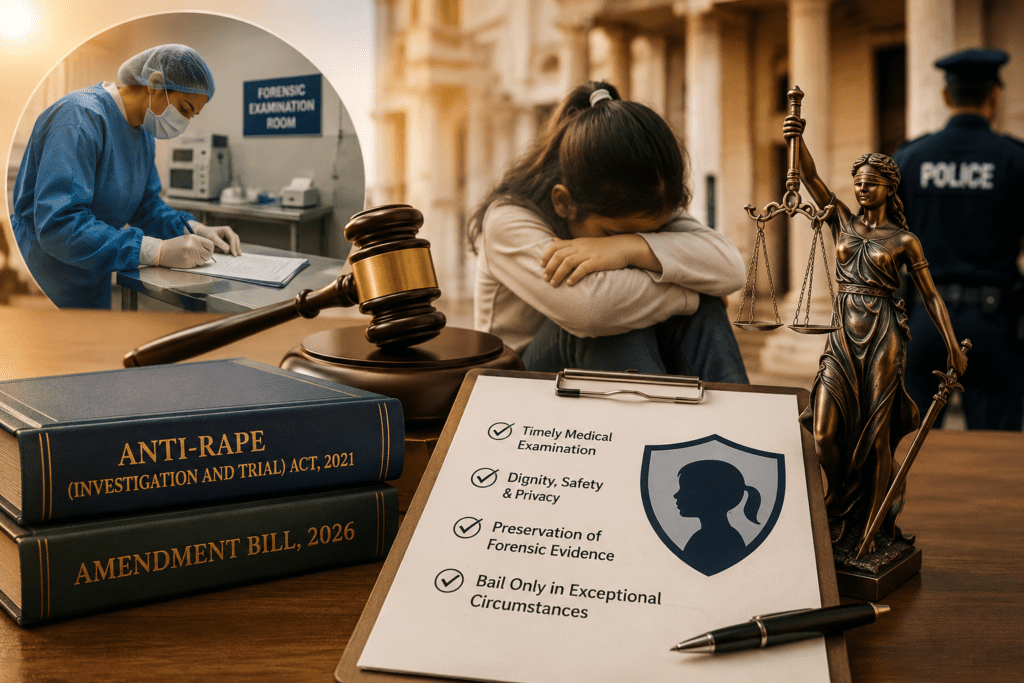
The Government of Pakistan has introduced the Anti-Rape (Investigation and Trial) (Amendment) Bill, 2026, proposing significant changes to strengthen child protection and improve judicial safeguards under the Anti-Rape (Investigation and Trial) Act, 2021. The amendment introduces a new proviso in Section 4 as well as a new Section 16A, aiming to address delays in medical examination and to tighten bail standards in cases involving child victims of abuse.
Under the amendment to Section 4, it has been provided that in every case where a child is alleged to be a victim of abuse, the police shall ensure that a medical examination is conducted within twenty-four hours of the report. The examination is required to be carried out by a qualified forensic expert in a manner that upholds the dignity, safety, and privacy of the child, and the forensic evidence collected must be properly preserved and submitted as part of the investigation. This provision seeks to ensure timely collection of forensic evidence and prevent loss or contamination of critical material in child abuse cases.
In addition to this, the Bill inserts a new Section 16A titled “Bail only in exceptional circumstances.” The new provision states that in cases involving sexual abuse, physical abuse, or exploitation of children, bail shall not be granted as a routine matter and may only be allowed where exceptional circumstances exist. It further requires courts to consider the best interests of the child victim, including the risk of further harm or intimidation by the accused, before granting bail. The intention behind this provision is to strengthen child protection within the criminal justice process and ensure that accused persons do not misuse bail to influence or threaten victims.
Officials stated that the amendments have been introduced to address gaps in the existing legal framework, particularly delays in medical response and inconsistent bail decisions in sensitive cases. The changes are expected to improve the quality of investigations, strengthen evidentiary value in child abuse cases, and provide stronger legal safeguards for vulnerable victims while ensuring a more structured and sensitive judicial response.