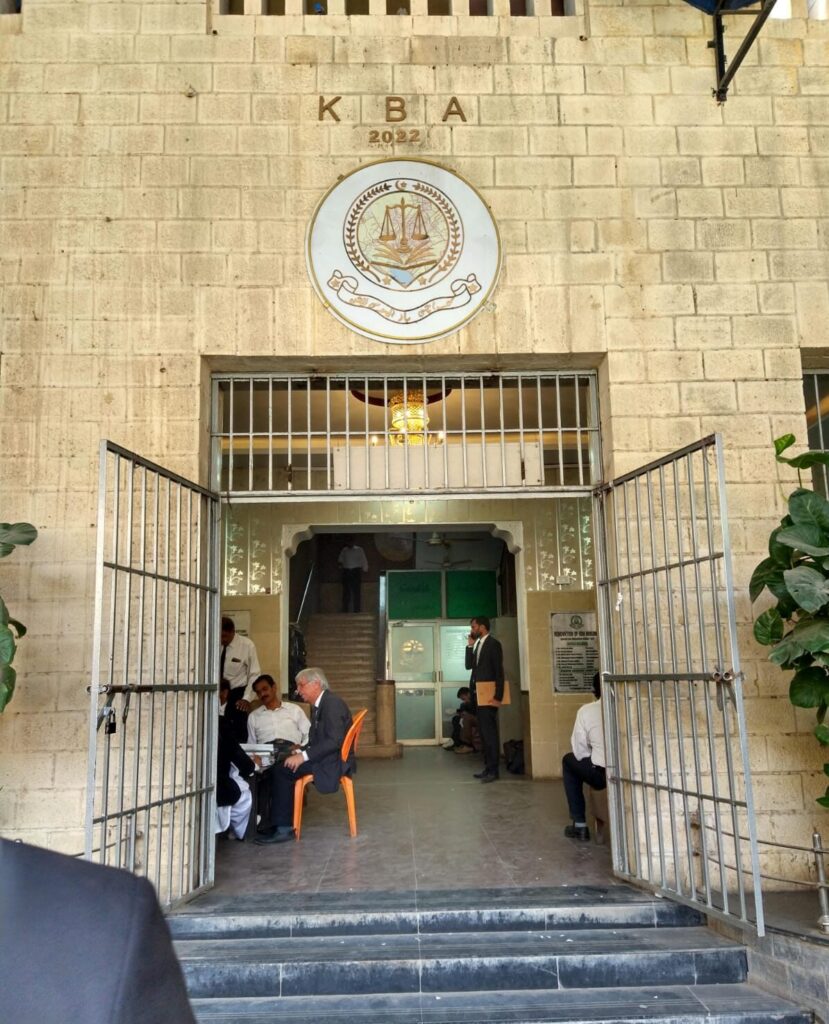
Karachi, May 8, 2026 — The Sindh High Court Bar Association, Karachi (SHCBA), convened a Special General Body Meeting on Friday, presided over by its President, Mr. Muhammad Haseeb Jamali, along with the Managing Committee. During the session, the Association unanimously passed a strongly worded resolution condemning what it termed as “preplanned and organized rigging” in the Karachi Bar Association (KBA) Annual Elections held under the supervision of the Sindh Bar Council.
According to SHCBA, multiple polling stations witnessed the recovery of pre-filled ballot papers after 10 a.m., an incident reportedly observed by hundreds of lawyers present at the City Courts premises. The Association stated that these discoveries completely undermined the principles of a free, fair, and transparent electoral process. In light of the escalating allegations and unrest, the elections scheduled for May 7, 2026, were subsequently cancelled.
SHCBA condemned the “undemocratic practices” allegedly introduced into the bar elections, asserting that such acts erode the integrity of the legal fraternity and damage the credibility of representative institutions. The Association stressed that lawyers across Sindh reject any form of manipulation or unlawful interference in bar politics.
In its resolution, the Sindh High Court Bar Association put forward several urgent demands. It called for the immediate removal of the current Administrative Committee of the Karachi Bar Association and the restoration of the previous elected committee, excluding members who are contesting the current KBA elections, until fresh polls are conducted.
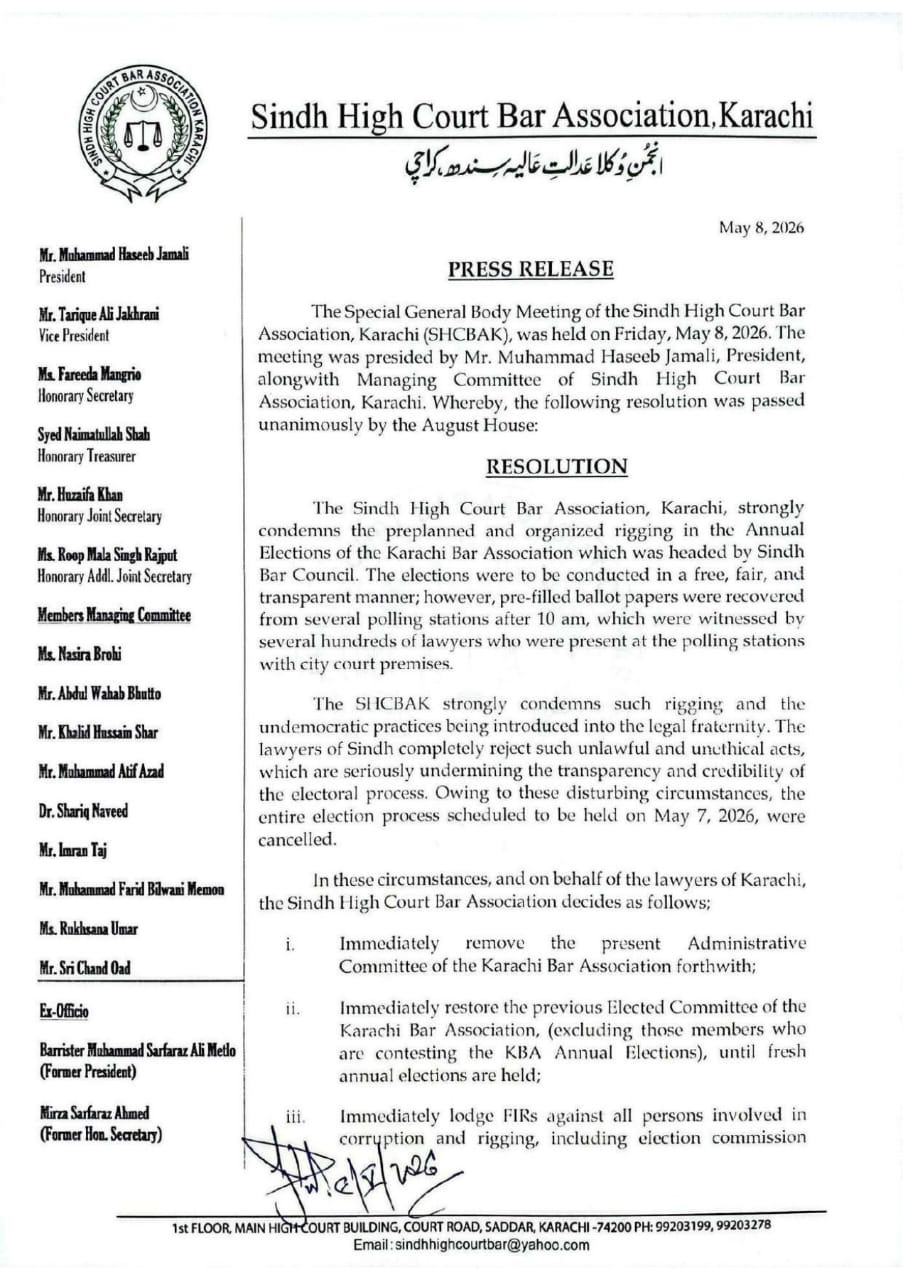
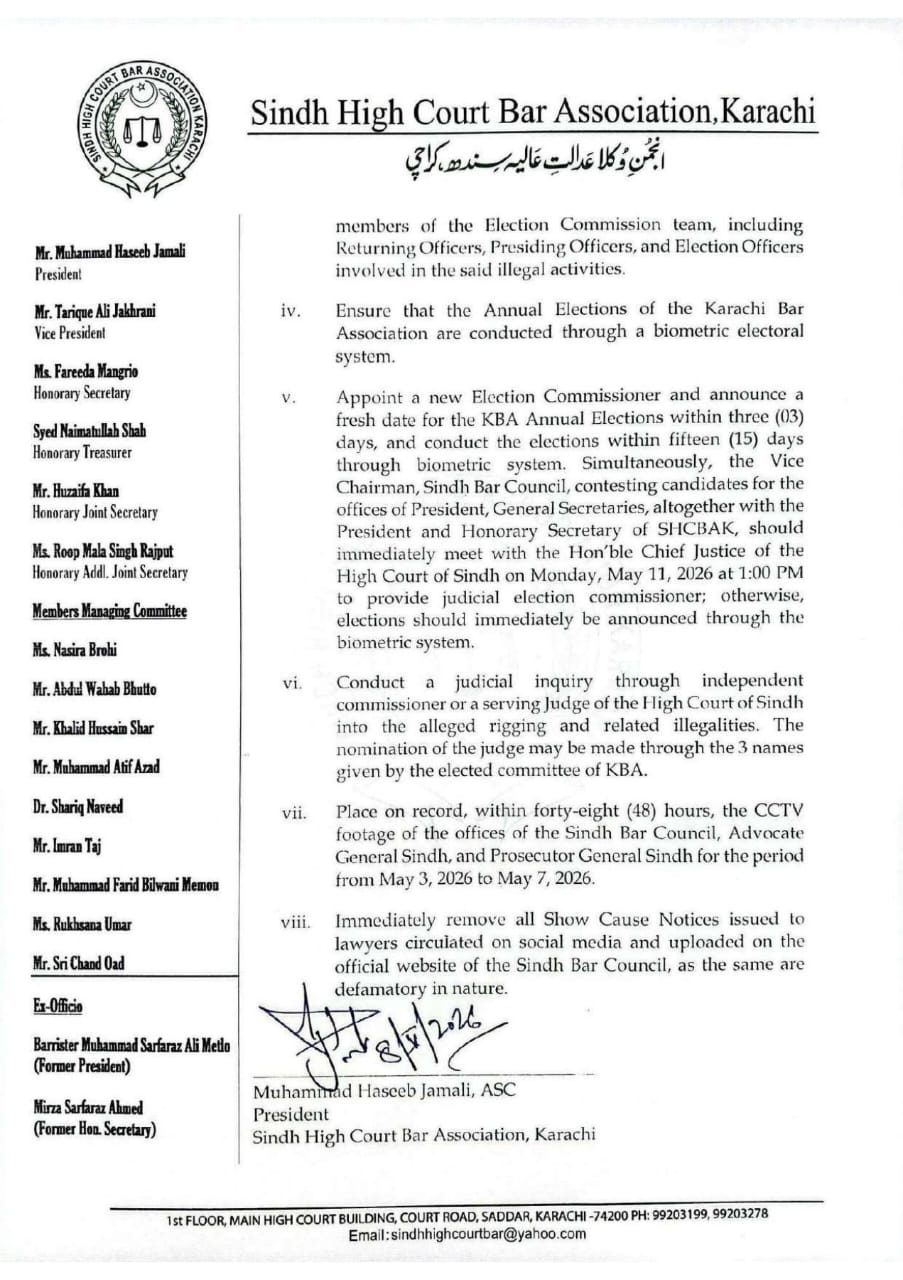
The Association also urged authorities to register FIRs against all individuals involved in the alleged rigging, including members of the Election Commission team, Returning Officers, Presiding Officers, and Election Officers. SHCBA further demanded that the upcoming elections be held through a biometric voting system to ensure transparency.
Additionally, the resolution called for the appointment of a new Election Commissioner and the announcement of a fresh election date within three days, with the polling process to be completed within fifteen days. The Association directed that a delegation—comprising the Vice Chairman of the Sindh Bar Council, contesting candidates for key positions, and office bearers of SHCBAK—meet the Hon’ble Chief Justice of the High Court of Sindh on May 11, 2026, at 1:00 PM to request the provision of judicial officers to oversee the electoral process. Should judicial oversight not be provided, SHCBA insisted that elections proceed through the biometric system without delay.
The Association further demanded an independent judicial inquiry, led either by a former judicial commissioner or a serving judge of the High Court of Sindh, into the allegations of rigging and misconduct. It proposed that the judge be selected from three names submitted by the elected committee of the Karachi Bar Association.
Finally, SHCBAK called for the release of CCTV footage from the offices of the Sindh Bar Council, Advocate General Sindh, and Prosecutor General Sindh, covering the period from May 3 to May 7, 2026, within 48 hours, to ensure full transparency.
The resolution reflects rising tensions within the legal community following the disrupted KBA elections and highlights growing calls for reform, accountability, and the safeguarding of democratic norms within bar institutions.
