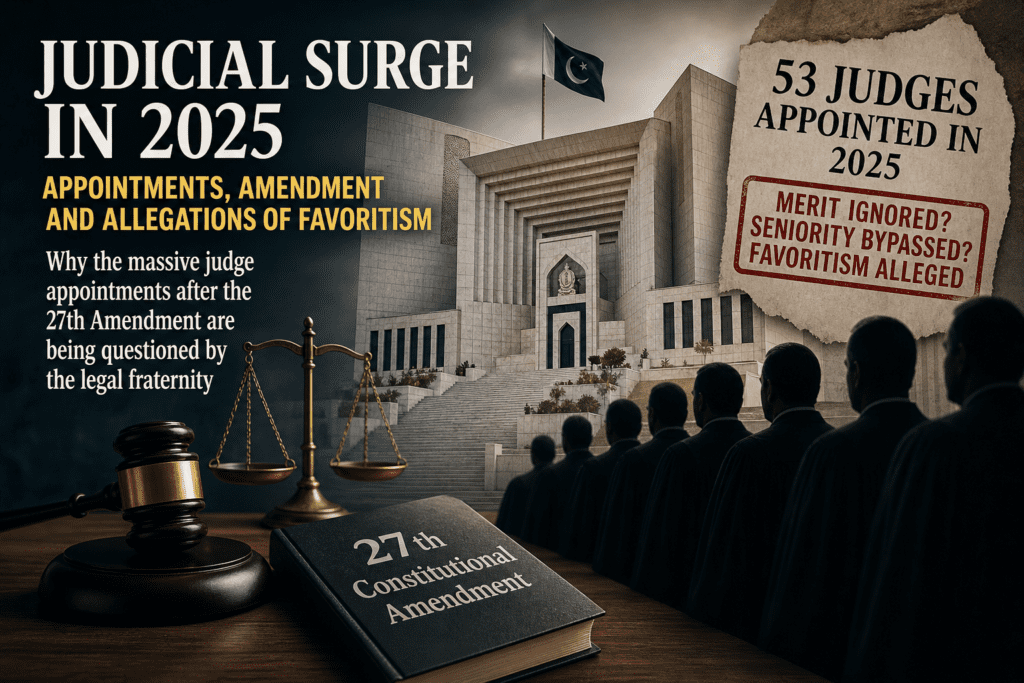
The year 2025 witnessed an unprecedented surge in the appointment of judges across Pakistan’s superior judiciary, with figures indicating a sharp rise compared to previous years. According to available data, a total of 53 judges were appointed, making it the highest number in recent years. This dramatic increase, particularly within high courts, has drawn significant attention from the legal community, especially when viewed alongside the timing of the controversial 27th Constitutional Amendment, which fundamentally altered the judicial structure and appointment mechanisms.
The 27th Amendment introduced sweeping changes, including the creation of a new constitutional court and provisions that reduced the role and independence of the superior judiciary. Notably, the amendment removed the requirement for judges’ consent in transfers and enhanced executive influence over judicial appointments ([Free and Fair Election Network][1]). Critics argue that such structural changes paved the way for rapid and, in some cases, questionable appointments. Legal experts and bar associations have raised concerns that the sudden increase in judicial inductions was not merely coincidental but linked to the broader reconfiguration of judicial authority under the new constitutional framework.
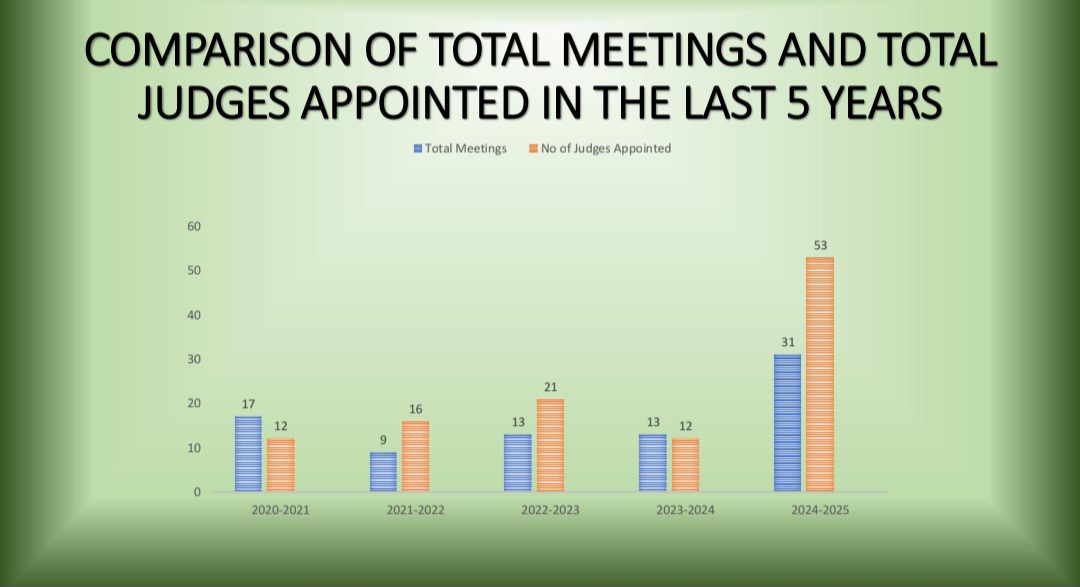
A major point of contention remains the alleged disregard for seniority and merit in these appointments. The legal fraternity, including bar councils and senior advocates, has openly criticized the process, claiming that several appointments favored junior or less-experienced individuals over more senior and deserving candidates. This perception of favoritism has been further reinforced by earlier controversies, such as the appointment of judges bypassing seniority norms, which had already sparked debate within judicial circles ([AP News][2]). Lawyers argue that such practices undermine institutional integrity and erode public confidence in the judiciary.
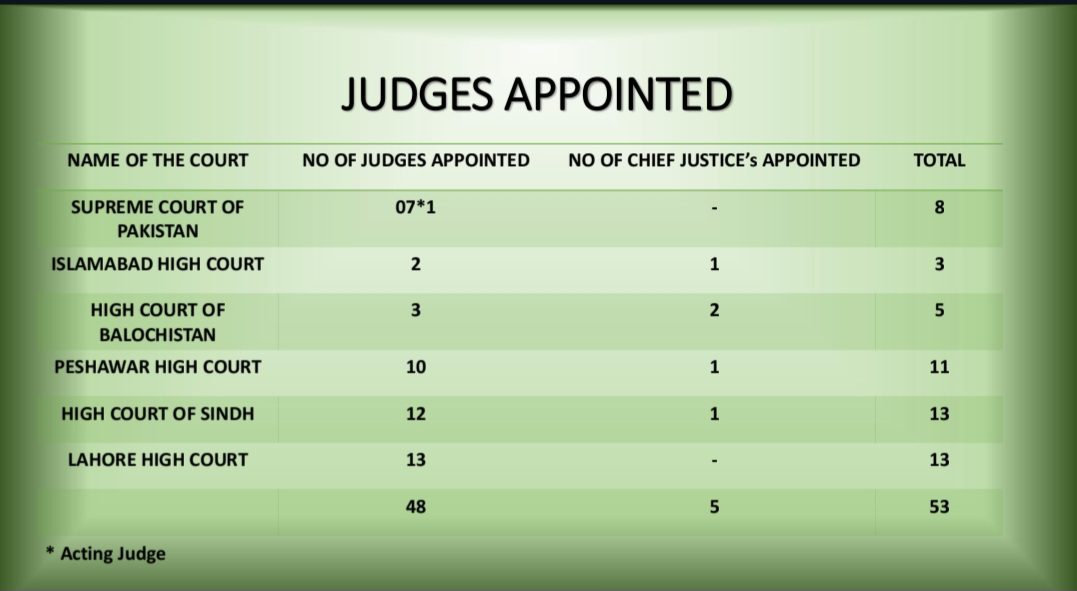
Among those appointed in 2025, several names emerged from the high courts, particularly the Sindh High Court, including Justice Muhammad Jaffer Raza, Justice Nisar Ahmed Bhanbhro, Justice Ali Haider ‘Ada’, Justice Muhammad Osman Ali Hadi, Justice Khalid Hussain Shahani, and Justice Syed Fiaz ul Hassan Shah, all appointed around January 2025 ([High Court of Sindh][3]). While official records confirm these appointments, the broader debate continues over the criteria used in selecting candidates. With resignations, protests, and legal challenges emerging in the wake of the 27th Amendment, the question remains whether these appointments reflect genuine judicial strengthening or a deeper shift toward centralized control over the judiciary.
[1]: https://fafen.org/wp-content/uploads/2025/11/NA-21session-Briefer.pdf?utm_source=chatgpt.com “[PDF] Proceedings, Debates, and the 27th Constitutional Amendment”
[2]: https://apnews.com/article/76005a47580c2b126123e316717341c5?utm_source=chatgpt.com “Pakistani parliamentary panel picks a judge third
