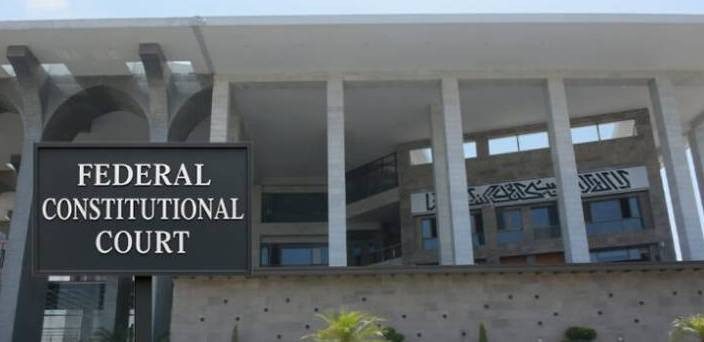
ISLAMABAD, March 11, 2026: In a move mirroring the Supreme Court’s recent directive, the Federal Constitutional Court of Pakistan has issued a notification implementing strict austerity and fuel conservation measures. The new policy, effective immediately, introduces a four-day workweek and significantly reduces fuel quotas for official vehicles.
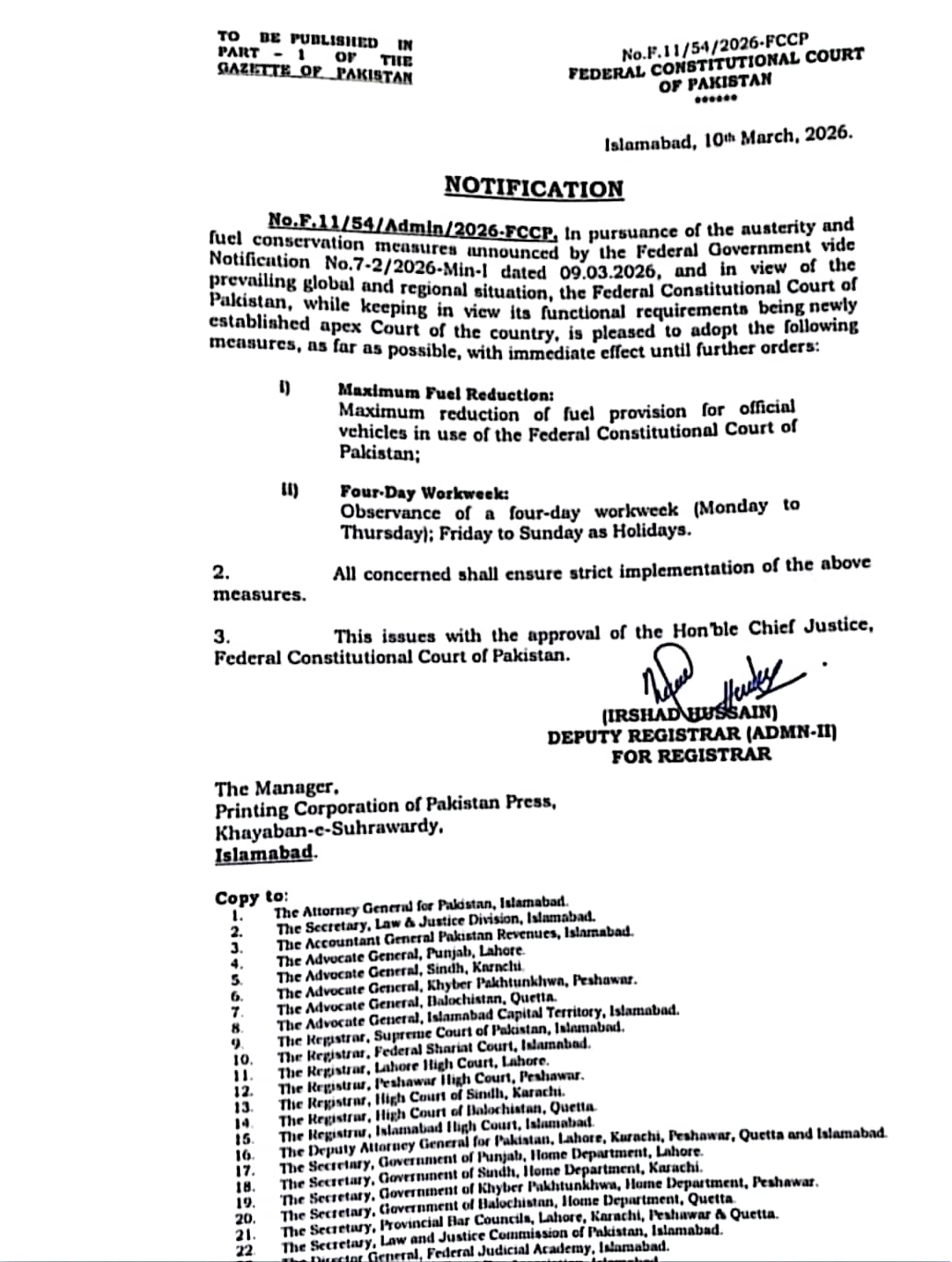
The notification, issued by Deputy Registrar Irshad Hussain, cites the Federal Government’s earlier directives on fuel conservation and cites the “prevailing global and regional situation” as the rationale behind the decision. The Court stated that it is adopting these measures “as far as possible, keeping in view its functional requirements being newly established apex Court of the country.”
According to the notification (No.F.11/54/Admin/2026-FCCP), the court will observe working days from Monday to Thursday, with Friday through Sunday declared holidays. Additionally, the order mandates a “maximum reduction of fuel provision for official vehicles.”
This decision follows a similar pattern set by the Supreme Court of Pakistan, which recently announced its own energy-saving plan, signaling a unified approach among the higher judiciary to comply with federal austerity policies.
While the measure is being viewed as a patriotic step towards national savings, legal experts and court officials are raising concerns about its potential impact on the judiciary’s primary function: delivering justice.
With the court operating only four days a week, there are fears that the disposal rate of cases will slow down, potentially adding to the existing backlog. The Federal Constitutional Court, as a newly established apex court, is still in the process of streamlining its workflows, and a reduced schedule could hinder its ability to tackle urgent constitutional matters.
