
Karachi – In a significant development, the Sindh High Court has ordered a stay on all narcotics-related matters in district courts across the province, citing a legal vacuum created by the newly enacted Sindh Control of Narcotics Substances Act, 2024.
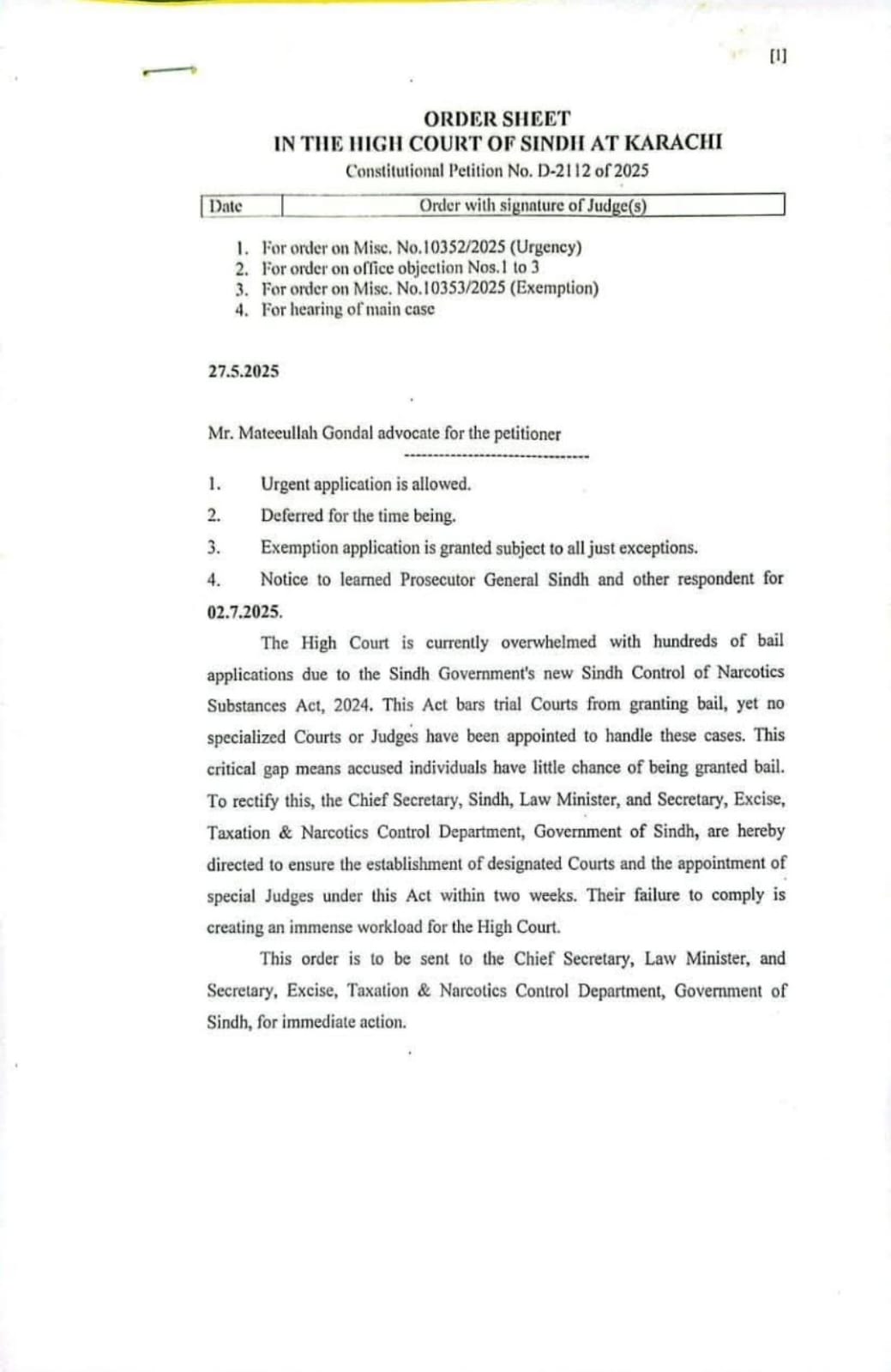
According to the order issued in Constitutional Petition No. D-2112 of 2025, district courts are currently barred from granting bail in narcotics cases under the new Act. Despite this restriction, no special courts or judges have yet been appointed to handle such cases, leaving hundreds of accused individuals in legal limbo.
As a result, even when bail is granted by higher courts, the district courts are reportedly refusing to accept surety bonds, effectively preventing release from custody.
The High Court, acknowledging the gravity of the situation, has directed the Chief Secretary Sindh, Provincial Law Minister, and the Secretary, Excise, Taxation & Narcotics Control Department to take immediate steps to establish special courts and appoint designated judges under the new Act within two weeks.
“The absence of proper judicial forums under the new law is placing an unbearable burden on the High Court, which is now inundated with hundreds of bail applications,” the court observed. The next hearing is scheduled for July 2, 2025, and notices have been issued to the Prosecutor General Sindh and other respondents.
Legal experts warn that unless swift action is taken, the legal deadlock could lead to serious constitutional and human rights concerns for those accused under the new narcotics law.
