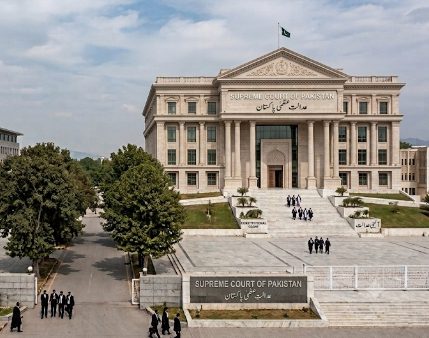
Does Pakistan Need a Separate Constitutional Court?
The proposal to establish a separate Constitutional Court in Pakistan has sparked a vigorous and often contentious debate. Proponents argue that such a court would strengthen constitutional governance, uphold the rule of law, and ensure the swift adjudication of constitutional disputes. Conversely, critics contend that creating a separate constitutional court could undermine the authority of the Supreme Court, lead to institutional fragmentation, and complicate the judicial framework.
What is a Constitutional Court?
A Constitutional Court is a specialized judicial institution that exclusively adjudicates matters relating to the interpretation and enforcement of the Constitution. Unlike ordinary courts, which deal with civil, criminal, and administrative cases, a constitutional court focuses solely on determining the constitutionality of laws, executive actions, and constitutional amendments. Its primary function is to safeguard constitutional supremacy and protect fundamental rights.
Why Might Pakistan Need a Separate Constitutional Court?
Although a constitutional court is not a complete solution to Pakistan’s judicial challenges, it could serve as a significant step toward meaningful judicial reform.
1. Specialized Constitutional Expertise: Dedicated judges would develop expertise in constitutional interpretation, leading to more consistent and coherent constitutional jurisprudence.
2. Reduced Workload of the Supreme Court: The Supreme Court currently hears constitutional, civil, criminal, and appellate matters. Separating constitutional cases would improve judicial efficiency and reduce delays.
3. Expedited Resolution of Constitutional Disputes: Constitutional controversies, particularly those involving elections and governance, require prompt decisions. Delayed judgments often contribute to political uncertainty and institutional instability.
4. Stronger Protection of Fundamental Rights: A specialized constitutional bench could prioritize rights-based jurisprudence and provide more effective protection of citizens’ constitutional freedoms.
5. Strengthened Federalism: A constitutional court could facilitate the timely resolution of disputes between the federation and the provinces, thereby reinforcing constitutional balance among fedrating units.
Historical Perspective
Pakistan’s constitutional journey has been marked by recurring institutional crises. The 1956 Constitution established a parliamentary democracy but was soon abrogated. The 1962 Constitution introduced a presidential system with expanded executive powers. The 1973 Constitution restored parliamentary democracy and reaffirmed constitutional supremacy, with the Supreme Court serving as the final interpreter of the Constitution.
Over the decades, disputes concerning the dissolution of assemblies, military interventions, judicial appointments, and election controversies have increasingly drawn the judiciary into political conflicts. These developments have intensified calls for a specialized constitutional court.
Advantages
– Specialized expertise in constitutional law.
– Reduced burden on the Supreme Court.
– Faster resolution of constitutional disputes.
– Stronger constitutional supremacy.
– Enhanced protection of fundamental rights.
– More effective resolution of federal-provincial disputes.
– Improved separation of powers and institutional accountability.
Disadvantages
– Potential jurisdictional conflicts between the Supreme Court and the Constitutional Court.
– Additional financial and administrative costs.
– Risk of politically motivated judicial appointments.
– Possible fragmentation of judicial authority.
– The Supreme Court already possesses constitutional jurisdiction.
– Constitutional amendments and extensive institutional restructuring would be required.
Conclusion
Pakistan’s constitutional democracy is becoming increasingly complex, necessitating judicial mechanisms capable of addressing evolving constitutional challenges. A separate Constitutional Court has the potential to strengthen constitutionalism, federalism, and the protection of fundamental rights. However, its success would depend on transparent judicial appointments, institutional independence, and clearly defined jurisdictional boundaries. If carefully designed, a Constitutional Court could complement rather than weaken the Supreme Court. Ultimately, the objective should not merely be institutional restructuring but the promotion of good governance, the rule of law, democratic accountability, and public confidence in the judiciary.
