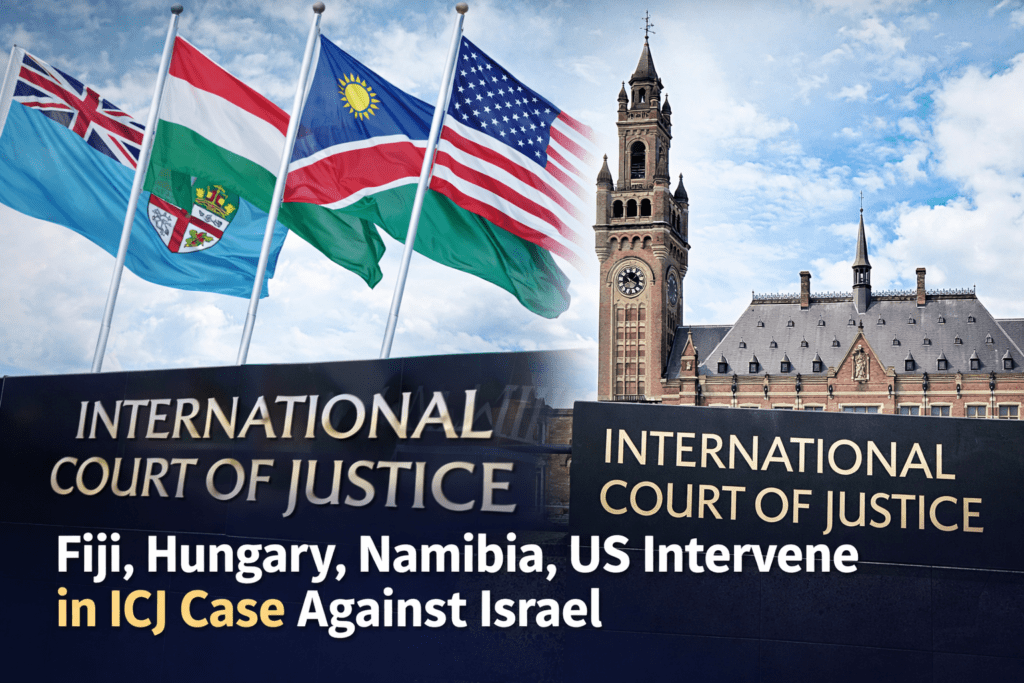
The submissions outlined key legal questions the court must address, particularly the standard for determining genocidal intent. Namibia argued that the court may infer intent from the scale, systematic nature, and repetition of alleged acts, pointing to forced displacement, starvation, and repeated killing of children as compelling indicators.
In contrast, Hungary, Fiji, and the US urged the ICJ to retain a strict threshold, noting that genocidal intent should only be inferred when the pattern of conduct leaves no other reasonable explanation. They warned against broadening the legal scope of genocide, cautioning that doing so risks politicizing the convention.
Namibia further stressed that genocide can be committed through actions or omissions, including denial of life-sustaining necessities. Fiji, meanwhile, highlighted the complexities of urban warfare and the use of civilian shields, warning that redefining such military operations as genocide could expose peacekeeping forces to unwarranted accusations. Fiji also questioned the reliability of UN reports, which it argued often rely on secondary sources.
Earlier this week, the Netherlands and Iceland also intervened. The Netherlands urged the court to adopt a lower threshold for “serious bodily or mental harm” in cases involving children, while Iceland cautioned that the high bar for inferring genocidal intent should not make such findings nearly impossible.
The ICJ has now requested written observations from South Africa and Israel in response to these interventions.
